Carbohydrates, Proteins and Fats: Their Basic Roles in the Body
Understanding the three macronutrients and their essential functions
Educational content: This article explains nutrition science. It is not personal advice or medical guidance. Consult qualified professionals about your individual health.
What are Macronutrients?
Macronutrients are nutrients your body needs in large quantities to function: proteins, carbohydrates, and fats. Unlike micronutrients (vitamins and minerals), macronutrients provide energy and serve as building blocks for body structures.
All three macronutrients are essential for health. The optimal amount of each varies between individuals based on genetics, activity level, health status, and personal circumstances. No single proportion is "perfect" for everyone.
Proteins: Building and Repair
Proteins are composed of amino acids, which your body uses for multiple purposes:
Primary Functions
- Tissue building and repair: Building muscle, skin, hair, nails, and connective tissue
- Enzyme production: Creating enzymes that catalyze biochemical reactions
- Immune function: Producing antibodies to fight infection
- Hormone synthesis: Creating hormones that regulate body processes
- Transport: Moving nutrients and other substances through the bloodstream
- Acid-base balance: Maintaining proper pH in body fluids
Protein also provides 4 calories per gram and has a higher thermic effect than other macronutrients, meaning your body uses more energy to digest it.
Food Sources
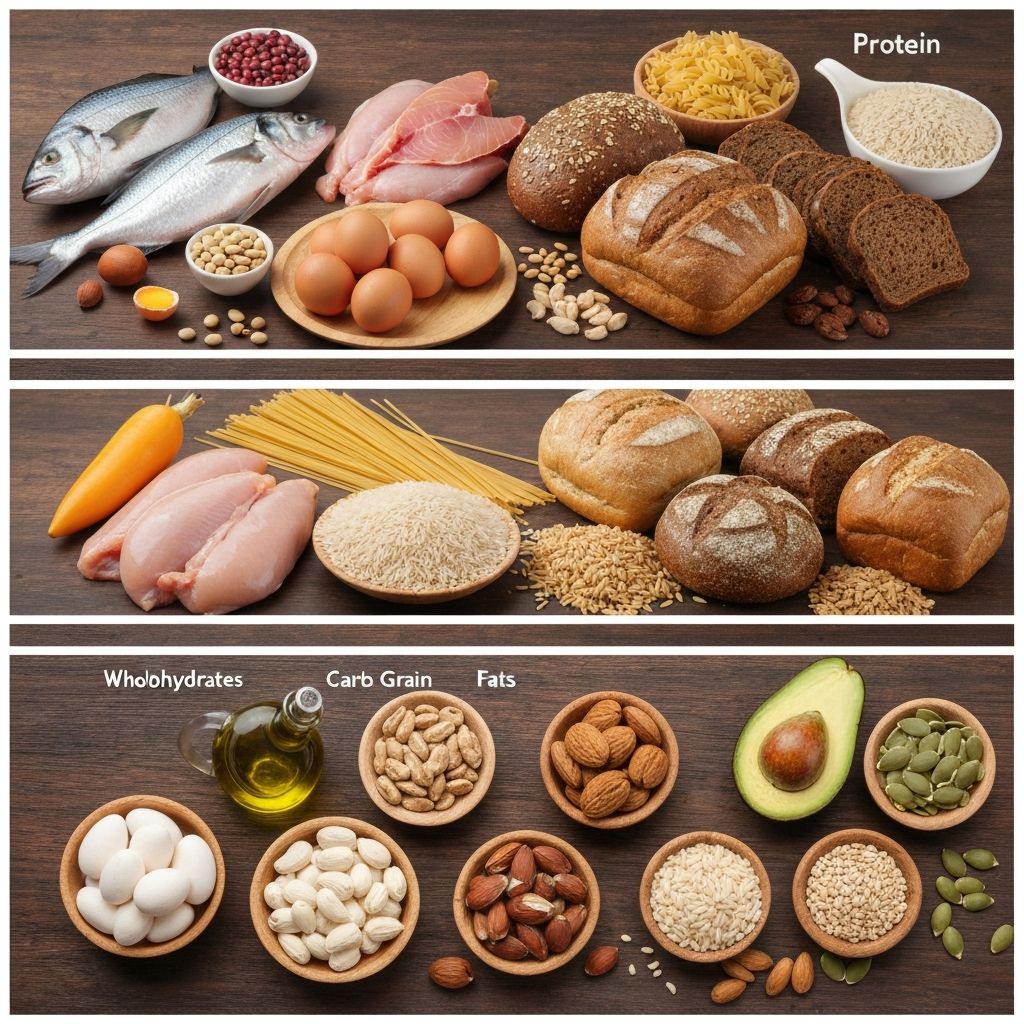
Animal sources: meat, poultry, fish, eggs, dairy. Plant sources: legumes, nuts, seeds, whole grains, soy products. Different sources provide varying proportions of amino acids and accompanying nutrients.
Carbohydrates: Primary Energy Source
Carbohydrates are sugars and starches that break down into glucose, your body's preferred energy source for many functions, particularly the brain and nervous system.
Primary Functions
- Energy provision: Providing readily available energy for brain, muscles, and tissues
- Fiber: Supporting digestive health and beneficial gut bacteria
- Nutrient storage: Storing glucose as glycogen in muscles and liver
- Vitamin and mineral carriers: Whole carbohydrate sources contain essential micronutrients
Carbohydrates also provide 4 calories per gram. Different types—simple sugars versus complex starches—break down at different rates and have different effects on blood glucose levels and satiety.
Food Sources
Whole grains, legumes, vegetables, fruits, and dairy contain carbohydrates along with fiber, vitamins, and minerals. Refined carbohydrates have had fiber and nutrients removed. Both types provide energy, but whole food sources offer greater nutritional density.
Fats: Energy Storage and Hormone Production
Fats (lipids) serve critical functions beyond energy storage. While often discussed negatively, dietary fats are essential for health.
Primary Functions
- Energy storage: Storing concentrated energy (9 calories per gram)
- Hormone production: Creating hormones that regulate inflammation, mood, and metabolism
- Vitamin absorption: Enabling absorption of fat-soluble vitamins A, D, E, and K
- Brain health: Supporting brain development and function
- Cell membrane structure: Creating flexible cell membranes
- Inflammation regulation: Supporting both inflammatory and anti-inflammatory processes
Different types of fats have different effects: unsaturated fats support heart health, while trans fats and excessive saturated fats have less favorable health effects in high quantities.
Food Sources
Oils, nuts, seeds, avocados, fatty fish, egg yolks, and dairy contain fats. Different sources provide different ratios of saturated, unsaturated, and polyunsaturated fats alongside various nutrients.
Balancing Macronutrients
All three macronutrients are necessary. The optimal balance varies based on:
- Individual genetics and metabolism
- Activity level and exercise type
- Health status and conditions
- Age and life stage
- Personal preference and cultural background
- Specific goals (athletic performance, recovery, satiety, etc.)
There is substantial research supporting various macronutrient ratios for different individuals and goals. What works well for one person may not be optimal for another.
Nutrient Density Matters
Beyond macronutrients, the foods you choose influence nutrient intake:
- Whole foods provide vitamins, minerals, antioxidants, and fiber
- Processed foods may be high in macronutrients but low in micronutrients
- Different foods provide different combinations of additional beneficial compounds
- Food variety ensures a broader spectrum of nutrients
This is why nutritionists emphasize food quality alongside macronutrient balance.
Summary
Proteins build and repair tissues and create enzymes. Carbohydrates provide readily available energy. Fats store energy and support hormone and vitamin absorption. Your body needs all three, and the optimal balance depends on your individual circumstances, activity, and health.
Important: This explanation of nutrition science is educational. For guidance about your personal health, consult a qualified healthcare professional or registered dietitian.